
If you’ve been in business for a while, someone has probably told you that you need to run Google Ads. And if you’ve spent any time on the internet looking for advice, someone else has probably told you they’re a waste of money.
Or maybe you’ve already tried a campaign in the hopes they would generate some leads for your small business and then been disappointed when the only results you get are less money in your business bank account.
So, are Google Ads worth it? The truth is, it depends and it depends on factors specific to your business. Before we get into the exact factors you should consider before entertaining the idea of Google Ads, let’s get clear on what “worth it” really means.
Are Google Ads Worth It? 6 Factors to Help You Decide
I’ve managed Google Ads for small businesses across a range of industries, marketing goals and budgets. And the question I get asked most often is “are Google Ads worth it”. My answer is always, well — it depends. It depends on factors like budget, offer and internal processes that are all very unique to each individual business.
I’m not going to tell you Google Ads are right for every business, at every stage of business, because they’re not. But I will walk you through the exact questions I ask when I help business owners decide whether Google Ads make sense for their business.
Answer them honestly and you’ll have a pretty good idea whether you should consider Google Ads or you should prioritize something else before an investment in ads.
1. What is your budget for Google Ads?
Let’s get this out of the way now – budget matters. If you have a big, bottomless marketing budget you can just skip reading the rest of this post.
A big marketing budget you’re not worried about spending puts you on a fast & furious (maybe reckless) track for testing all.the.things. Spending your way through proving out your offer and funnel isn’t an approach I recommend, but it IS an approach.
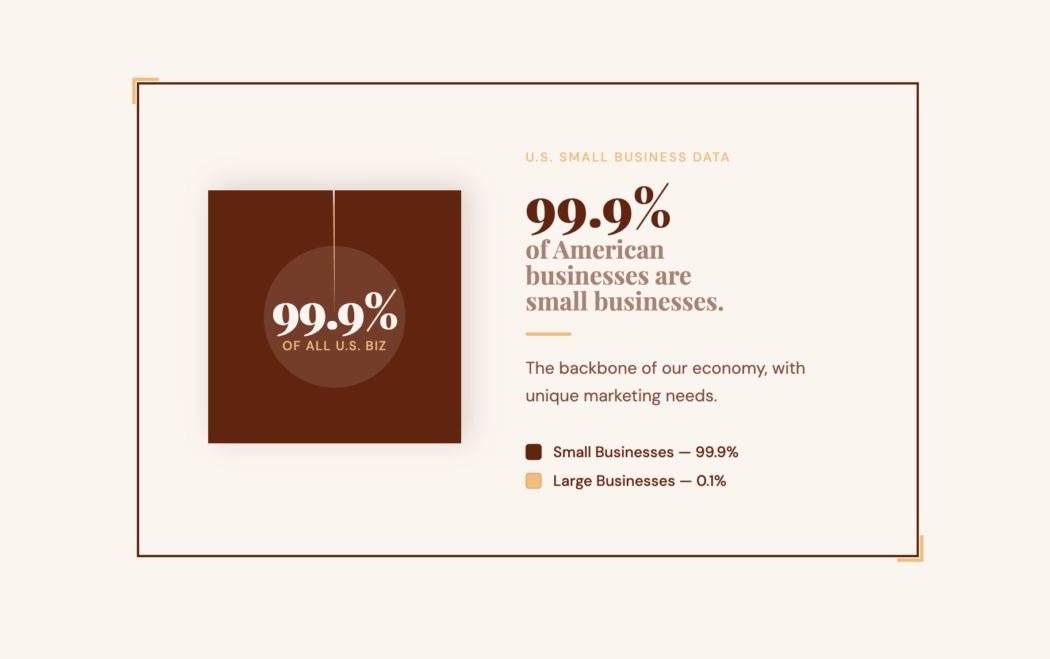
If you’re like the 33.2 million small businesses in America, which make up 99.9% of all U.S. businesses, then you’re marketing budget has limits and understanding how that budget is used in Google Ads matters.
Google Search Ads are charged by clicks vs. who simply sees your ad. Your cost per click will vary based on your business vertical and location. So you need a budget large enough to buy enough clicks to give your target keywords a chance to convert.
Think of it like grocery shopping for items to make guacamole. You need enough money to buy all the recipe items to make a delicious guacamole. If you skip the lime or salt, you’ve got a bland guacamole.
If your budget is so constrained you can only afford to buy a couple of clicks a day, your campaigns are going to provide bland results (i.e. none).
2. Does your offer do well, organically?
Given the limited budget most small businesses have for marketing, you should test and refine your offer over time, organically.
If your on-page SEO isn’t optimized I usually recommend small businesses start there first. You might find once you’re dialed in for organic traffic you don’t even need paid ads. But at the very least, you’re testing your website, landing page, offer and processes with free organic traffic.
Because again, whatever your website does organically, is exactly what it will do with paid traffic.
3. Do you offer something searchable?
Are there enough people searching for your service or product?
Google search ads are search term driven, meaning they display to people actively searching for the thing you offer. Keywords act as a bridge between the words your ads are bidding on and the things people type into Google.
If your product or service is super niche and there are not enough people searching for it, Facebook or Instagram ads may actually be a better place to start for digital ads.
4. Do you actually know what your website is doing?
Before you spend any money on ads, you need to know how your website is performing, right now. You need actual numbers, you need data.
How many people are visiting? Where are they coming from? What percentage of them are taking action? What percentage are becoming customers?
If you can’t answer those questions, you’re not ready for paid traffic because you won’t be able to tell if the ads aren’t working or if something else isn’t working.
Google Analytics is free and can provide you with everything you need to start. Get that in place, let it collect some data, and then have the Google Ads conversation. The goal isn’t to track for the sake of tracking. It’s to make decisions based on what’s actually happening, not what you hope or think is happening.
A website that struggles to convert organic traffic will struggle to convert paid traffic.
You really need to understand your website’s performance metrics before paying for ads.
5. Are you closing the leads you get?
If you are a leads-based business you know leads are only half of the equation. Your ability to manage and turn those leads into customers is the other half.
Are you confident in your sales process? Based on your business metrics, can you confidently say you close leads at a rate that allows you to be profitable?
Along with measuring how well your website can turn visitors into leads you also need to know how well your internal processes work at turning those leads into paying clients, before investing in local lead generation services.
The last thing you want to do is pay for leads that your lead management or sales process struggles to get past the finish line. During a Google Ads intensive, I helped a local marital arts gym put a simple lead management system in place along with their new campaigns, ensuring she’s getting the most out of her ad spend.
6. Can you handle more?
A business mentor of mine once told me “every opportunity is an obligation in disguise, so be careful of what you say yes to”. That advice has stuck with me ever since.
We all want more sales, more leads, more opportunities — but with it comes more stuff to do. Can you handle more stuff to do?
It seems like a silly question to ask until you’re overrun with orders to ship or mentally spent from all of the lead follow-up.
So before you pump paid traffic to your site, truthfully ask yourself if you and/or your team can handle more.
One of my e-commerce clients expected order volume to increase with Google Ads but had not prepared for a 5X order volume increase from Google Ads. She had a few stressful months packing orders in her garage until her internal processes were tuned up to handle the new volume.
When Google Ads work well, they can work really well. Be sure your internal processes are ready to work just as well.
So Are Google Ads Worth it For Small Businesses?
If you answered yes to most of the questions above, Google Ads are worth a serious look. They won’t fix a broken offer or a slow sales process but when the foundation is solid, paid search can be one of the most efficient ways to grow.
I work with a small number of established businesses to manage and improve their Google Ads. If you think you’re ready, get in touch and let’s have an honest conversation about whether it makes sense or not.